 3 weeks ago
130
3 weeks ago
130
50% of hedge fund failures are caused by operational risk alone, not bad investments.
According to a Capco study (Kundro & Feffer), which analyzed 100 hedge fund failures over a 20-year period, only 38% of failures were caused by investment risk alone. A full 50% were traced to operational failures like trade processing, valuation errors, accounting breakdowns, misrepresentation, and back-office controls.
Operational due diligence has become standard deal practice as value creation shifts from financial engineering to operational execution. Private equity and M&A professionals across the industry are investing more time understanding how a business runs before committing capital.
The following 17 firms represent where the majority of operational due diligence work is concentrated today, from lower middle-market to large-cap transactions. Use this as a benchmark to compare firms against each other by average deal size and where they play in the market.
dealroom
Data Intelligence · Q1 2026
Search Firm
Deal Size Tier
Sector Focus
Showing 17 of 17 firms
Selection Methodology: Firms selected based on market presence, deal flow participation, published case studies, and industry recognition across private equity operational due diligence engagements. Deal size ranges reflect typical transaction values where each firm is most active.
Operational Due Diligence Consulting Firm Profiles
Below, you’ll find a profile of each of the firms listed. You may be curious how we decided which firms to include.
Methodology: How We Selected These Firms
The firms have been segmented by deal size of the transactions where they typically participate in. This includes public transaction data where available, publicly disclosed information from the firms, and observed activity across private equity and M&A transactions. Since the firms do not disclose assets under management (AUM), deal size is the best indicator we have to understand market positioning and target client segment.
In assessing where firms fit, we considered:
- Number of transactions disclosed in large-cap, mid-market, lower mid-market transactions
- Positioning of the firm to provide due diligence (strategy led vs. execution focus on operational work)
- Type of buyers involved (mega-funds, large-cap PE firms, mid-market investors)
- Number of repeat deals in each deal size category.
Websites, case studies, industry reports, and reputable coverage (Bloomberg, Financial Times, Mergermarket) were used to compile this list.
This list is not meant to rank the quality of firms. It’s meant to represent where each firm typically operates when it comes to deal size and operational due diligence role.
We’ll break down each firm below.
- McKinsey & Company
- Boston Consulting Group
- Bain & Company
- EY-Parthenon
- Strategy&
- Oliver Wyman
- Deloitte
- PwC
- KPMG
- Alvarez & Marsal
- FTI Consulting
- L.E.K. Consulting
- Kearney
- Houlihan Lokey
- Grant Thornton
- BDO
- RSM
What Founders Say About Working with Top Operational Due Diligence Consulting Firms
Operational due diligence is gaining more attention as a key determinant of deal outcomes. Private equity has evolved from a leverage play to one focused on execution-driven value creation. “Private Equity firms have transitioned from relying solely on financial leverage to focusing on operational improvement as the primary driver of value creation,” says Streamliners. That’s why top operational due diligence firms are playing a bigger role in deals these days. They’re helping to determine how to create value during diligence, not just validating the business as is.
However, just because you hire a good firm doesn’t mean your organization can execute.
“There is a significant ‘execution gap’ between the brilliance of a strategic recommendation and the ability of the organization to successfully execute on that strategy,” says Bhaskar Ahuja, a global CFO and CIO who has scaled multi-billion-dollar platforms.
What separates great diligence from purely academic exercises is execution. While the firms below take different approaches to due diligence, the most important factor isn’t who you hire. It’s whether someone actually makes decisions based on their work and owns the execution when the deal closes.
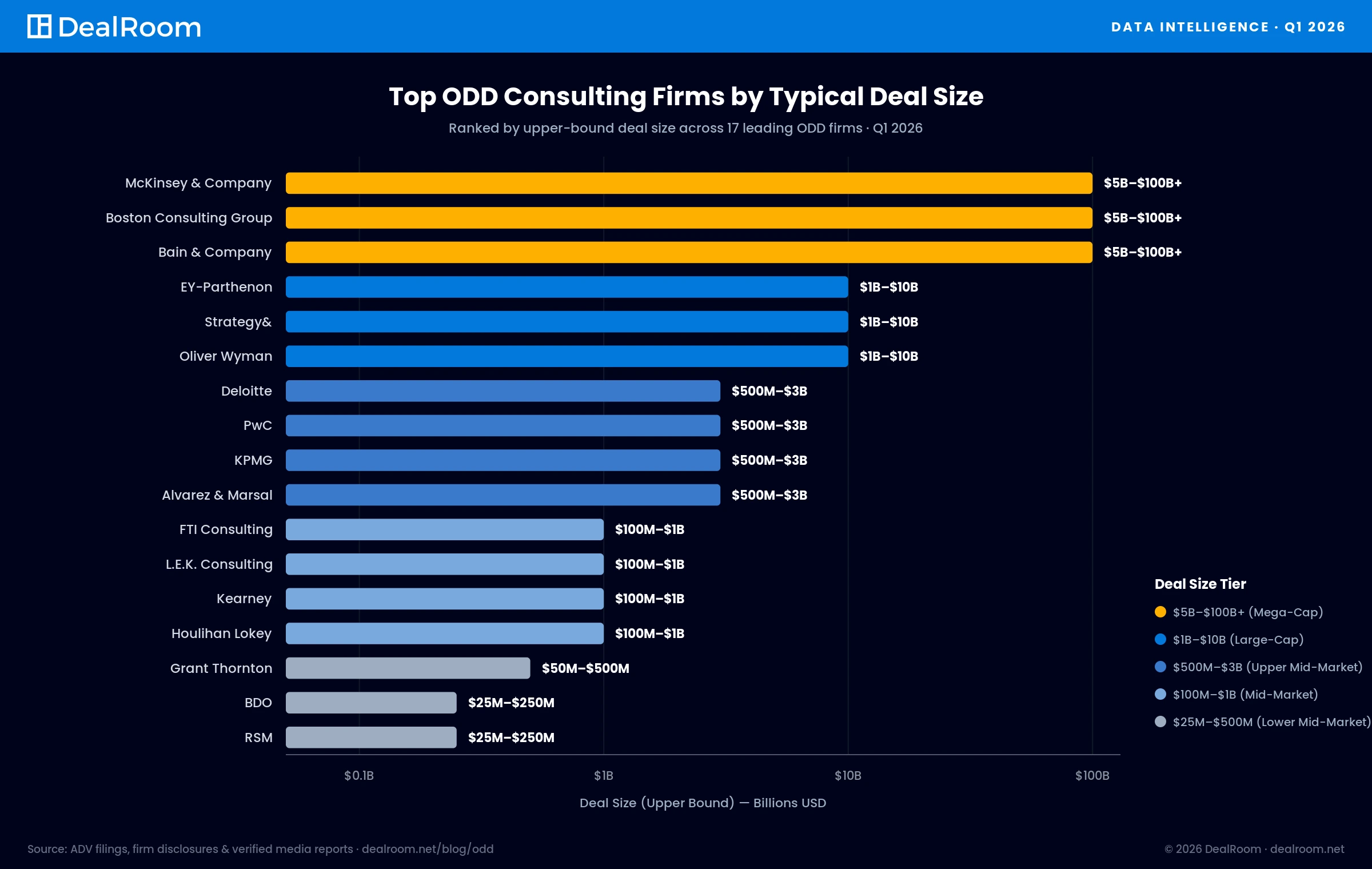
Learn more about each firm below.
McKinsey & Company
Typical Deal Size: $5B–$100B+
Location: New York, NY

McKinsey & Company targets the upper end of the market on larger cap deals where operations can frequently be the make or break factor on the investment thesis. Their approach to operational due diligence revolves around whether or not the business can execute the investment thesis. They look beyond just the numbers working on paper. Outside of diligence, they also work with clients to help translate deal strategy to execution when creating value depends on significant operational change.
Boston Consulting Group
Typical Deal Size: $5B–$100B+
Location: Boston, MA

Boston Consulting Group is focused on connecting diligence to value creation, starting with a keen understanding of how the deal will look and perform when it reaches its day-one operating conditions. By merging strategic diligence with operational know-how, they pinpoint areas where execution risk might derail the investment's core assumptions, examining both costs and performance. BCG continues to work with clients throughout the deal lifecycle to help them institutionalize repeatable M&A processes while translating insights gained throughout the diligence process into post-close execution plans that lead to measurable value creation.
Bain & Company
Typical Deal Size: $5B–$100B+
Location: Boston, MA
Investor-first operational due diligence starts with a basic question: Where does the value really come from and how do you capture it? At Bain & Company, they don't treat diligence as a siloed activity. They work closely with commercial teams to turn insights into a thorough and realistic plan to capture value before closing. This can include identifying critical cost and performance levers, stress-testing synergies, and understanding what must happen day one post closing to deliver your return expectations.
EY-Parthenon
Typical Deal Size: $1B–$10B
Location: Boston, MA

Operating in the upper middle market space, EY-Parthenon works with private equity firms and corporates on transactions where strategy and execution are critical to value creation. Their approach to operational due diligence is focused on uncovering the underlying drivers of value throughout the business and goes beyond the numbers to understand operations, technology and capabilities. Typically, this work spans the entire deal lifecycle from evaluating targets all the way through integration.
Strategy&
Typical Deal Size: $1B–$10B
Location: New York, NY

The integration of traditional strategy consulting with PwC’s extensive deal advisory services is apparent in Strategy&’s unique approach to operational due diligence. Working hand-in-hand with PwC’s diligence and transaction execution teams, Strategy& analyzes cost structure, operational risk and scalability and directly links it to value creation and post-close execution. The outcome is a holistic view of the transaction with diligence used to quantify upside potential, identify execution risk early on and develop a plan to realize value throughout the entire deal lifecycle, not just through the investment decision.
Oliver Wyman
Typical Deal Size: $1B–$10B
Location: New York, NY

Oliver Wyman's approach to operational due diligence is focused on understanding the key drivers of performance including operations, pricing and technology. There is an emphasis on how those levers affect growth and margin as well as support the competitive position. This usually entails combining commercial and operational insight into a single view and linking directly to a post-close plan to enable investors to make confident decisions based on a clear understanding of risk and opportunity.
Deloitte
Typical Deal Size: $500M–$3B
Location: New York, NY

Operating in the middle market, Deloitte's multidisciplinary approach incorporates operational, financial, tax and technical due diligence to provide an aggregated view of the deal. Deloitte's operational due diligence is focused on validating the investment thesis and turning it into a roadmap for value creation. Deloitte also advises on issues that extend past closing into the first 100 days. By linking together the findings from all workstreams, Deloitte helps clients see the full picture of risk and opportunity. This can be used to not only help price and position the deal, but to improve business operations after close.
PwC
Typical Deal Size: $500M–$3B
Location: London, UK

PwC's operational due diligence service provides an integrated approach that combines financial, commercial and operational due diligence into a seamless view of the transaction. They assist clients in confirming key drivers of the transaction by challenging assumptions behind the proposed investment. PwC looks beyond diligence to help clients connect their findings to price, deal structure and post-close integration to help ensure the value uncovered during diligence is captured after closing.
KPMG
Typical Deal Size: $500M–$3B
Location: Amstelveen, Netherlands

KPMG's operational due diligence process is thorough and holistic. Focused on giving investors a reality check on how the business actually works and where value can be added, KPMG teams collaborate across operational, financial and commercial issues to assess drivers of performance, cost structure and scalability. Special attention is given to identifying risks and realistic upside prior to closing. KPMG focuses on connecting due diligence to execution by transforming insight into actionable recommendations.
Alvarez & Marsal
Typical Deal Size: $500M–$3B
Location: New York, NY

Built around a boots-on-the-ground, operator-driven approach to due diligence, Alvarez & Marsal’s diligence teams comprise former executives who have spent their careers in the trenches operating and running businesses like yours. They think about what is going to improve performance once the deal has closed. They drill down into cost structure, working capital, supply chain and operational execution to identify where and how value can be created. They build detailed, actionable plans tied to specific initiatives and timelines. They know what must happen during phase one post closing.
FTI Consulting
Typical Deal Size: $100M–$1B
Location: Washington, DC
FTI Consulting understands that although big-picture strategy plays a role in middle-market transactions, they’re often won or lost on the operational nuances of the business and transparency into potential risks. That's why their approach to operational due diligence is boots-on-the-ground analysis of how the business actually operates. From cost structure to working capital to operational performance, FTI Consulting teams will unearth any value gaps. Their analysis will leave investors with a clear view of where performance needs to improve and how it can be achieved after close.
L.E.K. Consulting
Typical Deal Size: $100M–$1B
Location: Boston, MA

L.E.K. Consulting’s extensive experience in commercial diligence informs its operational due diligence approach. They focus on connecting market opportunity to value delivery capability. You’ll usually find L.E.K. working on transactions where growth and positioning are key deal drivers, and where diligence reports tie operational findings to value creation priorities and value realization needs post-close.
Kearney
Typical Deal Size: $100M–$1B
Location: Chicago, IL

Kearney's methodology is pragmatic, focused on execution and tangible value. Their roots are in operations and supply chain, and a significant amount of their time is spent on synergy identification and feasibility, ensuring that the projected savings or improvements are achievable at closing. Recommendations are typically practical and implementation oriented, with a direct connection to how the diligence findings will feed into the operational activities necessary to create value during phase one after close.
Houlihan Lokey
Typical Deal Size: $100M–$1B
Location: Los Angeles, CA
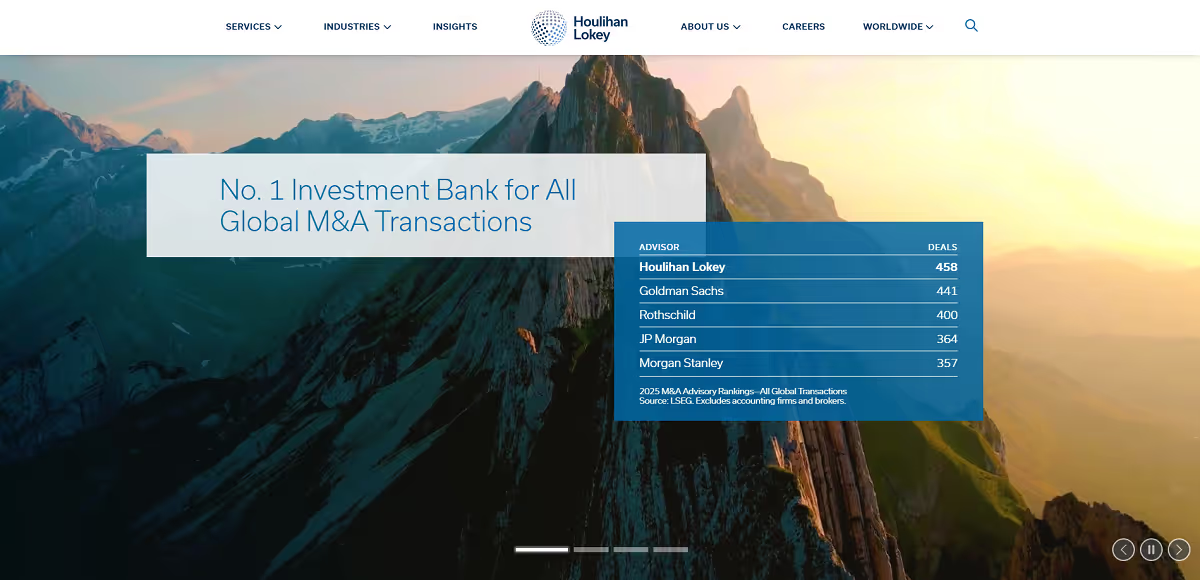
Houlihan Lokey approaches due diligence from a valuation first lens. They have a heavy focus on translating operational performance into value drivers for the deal. They’re not quite as operations-focused as some of the boutique consulting firms, but they do a great job bridging the operations work to valuation. They help investors think through downside risk, financial normalizers and pricing assumptions. Look for them on numbers driven deals where you see diligence that feeds into negotiating, deal structure and a realistic assessment of asset value.
Grant Thornton
Typical Deal Size: $50M–$500M
Location: Chicago, IL

Grant Thornton's experience is primarily in the lower middle-market where diligence is expected to be pragmatic, efficient, and connected to execution. Teams analyze cost structure and root causes of performance issues and potential, but also test assumptions related to synergy and uncover risks that could affect value. Transaction execution and post-close planning often follow logically from this work. They’re also focused on ensuring buyers don't overpay and can move quickly into integration with a realistic plan to capture value.
BDO
Typical Deal Size: $25M–$250M
Location: Chicago, IL
BDO specializes in lower middle-market transactions where the buyer requires transparency into the inner workings of the business without burdening the process. They assess operational performance, synergy opportunities and integration risk early in the process and link those findings directly to valuation and post-close planning. They use data analytics to pinpoint issues and deliver to investors a clear understanding of risk and upside potential as well as what needs to happen post closing to unlock value.
RSM
Typical Deal Size: $25M–$250M
Location: Chicago, IL
With a focus on middle market transactions, RSM's operational due diligence methodology is grounded in a realistic assessment of how a business really works. It's comprehensive and as streamlined as possible. There's a genuine emphasis on output. Insights are connected to pricing, deal structure and post-close execution so investors can move swiftly from due diligence to value creation.
What is Operational Due Diligence?
Operational due diligence reveals how a business actually runs before closing a transaction. Beyond financials, it evaluates the operations of the business including its processes, systems, people and operations on a day-to-day basis.
The goal is to see if the business can hit its numbers, uncover operational risk and know what will be needed to improve performance after the deal closes.
Operational Due Diligence vs. Financial and Commercial Due Diligence
Operational diligence covers how the business runs. Financial diligence covers what the numbers say. Commercial diligence covers if the market story checks out.
Financial diligence stress tests historical performance. You’re auditing revenue, margins, cash flow, and red flags in the books. Is what’s presented adding up? Are the numbers legitimate and accurate?
Commercial diligence paints a picture of the external view. It dives into market, customer, competitors, and growth opportunities. You’re stress testing demand and the ability of the business to achieve its projected growth.
Operational diligence falls right in the middle. It ties the numbers to the market through execution. Can the team actually execute? Are the systems and processes in place to scale? What are the bottlenecks? It solidifies assumptions into something concrete, and shows you exactly what will need to change post-close.
What Operational Due Diligence Actually Covers
Operational due diligence examines how the business actually operates. This involves looking into the nuts and bolts of day-to-day operations to understand what’s working, what’s broken, and what will require immediate attention after closing.
Core processes
How tasks are performed throughout the organization. Where bottlenecks are occurring. Where workarounds are indicative of larger problems.
Systems and data
What technology the company uses and how well it integrates. If reporting is reliable and standardized. Weaknesses typically manifest as slow decision making and data discrepancies.
People and organizational structure
Who is responsible for critical functions, and how decisions are made. If knowledge is siloed by certain individuals. This is typically where key person risks are identified.
Cost structure and efficiency
What the company spends money on and why. Where there are fixed costs versus variable. Where there is opportunity to increase margins without affecting day-to-day operations.
Scalability and execution risk
Can the current operation scale? What will fail when you scale? What are the operational must-fixes to support growth and how long will they take (and what will they cost) after close?
How Does Operational Due Diligence Work?
Operational due diligence aims to understand how the target business actually operates and what will be required to fix it post-close.
Operational diligence usually takes place alongside financial and commercial diligence. However, it focuses on a very different set of questions. Does the company have the capability to execute? Where are the bottlenecks? What is likely to break when growth accelerates?
Outlined below is a typical operational due diligence process from the perspective of the buyer:
1. Scope definition
Buyers will identify their key areas of focus prior to commencement. This will vary from deal to deal. A carve-out will have different areas of risk than a high-growth SaaS business looking to expand. It’s at this stage that you determine where to dig deeper and where a high-level review will suffice.
2. Data request and review
The team works together to identify key internal documents, system information and reporting outputs. This includes organizational charts, process documents, key performance indicators (KPIs) and system architecture. In most cases, gaps in data or poor reporting practices will highlight larger issues early on.
3. Management interviews
Interviews are conducted with members of the management team across operations, IT, finance and the frontline. This helps to understand the process from those that live and breathe it on a day-to-day basis. These interviews often uncover answers that differ from the documented procedures and it’s important to understand why.
4. Process walkthroughs
Buyers should avoid reviewing process summaries. Instead, walk through the critical processes step by step. From order to cash, procurement, and customer support. During this exercise, you’re looking to identify slow spots, manual intensive steps, and where mistakes are likely to happen.
5. Systems and data validation
At this stage, you’re looking to confirm the systems are enabling the business versus creating unnecessary admin work. Do tools talk to each other? Is the data reliable? Are spreadsheets being used to compensate for systems not doing their job?
6. Risk and gap analysis
This is where you compile your findings and identify areas of operational risk, excessive reliance on key people or weaknesses in the processes that may not scale. This step typically includes some form of quantification.
7. Value creation planning
Operational due diligence is pointless if you don’t also identify how to fix what you found. Identify the required changes including timing, cost and potential value created. This will help shape your plan post-close.
8. Integration with the deal model
Operational risks may affect price, while value creation opportunities may help build the case for the upside. Tying your operational findings back to how they impact the deal is crucial.
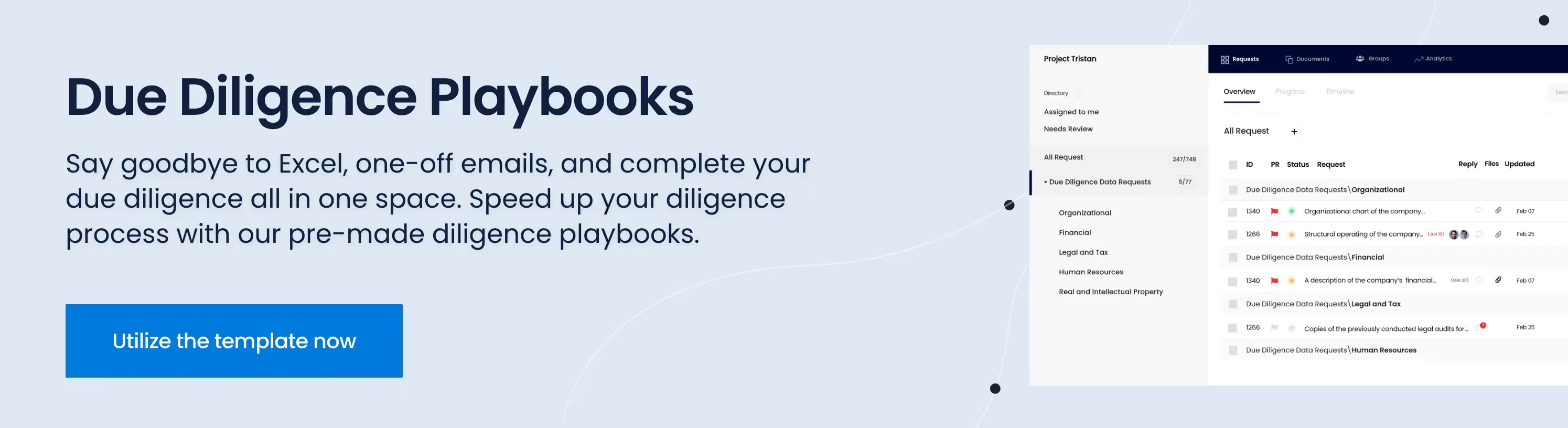
If you want a structured way to run this process, download our operational due diligence checklist.
When Do You Need an Operational Due Diligence Consulting Firm?
Sometimes you don’t need a firm to backstop your diligence. But if a transaction has certain characteristics, skipping one exposes you to unnecessary risk.
The biggest reason to engage support is when the underlying business is complicated or there are unknown downsides that aren’t apparent from public information. You’ll mostly encounter this with larger transactions with multiple business units, technology-intensive businesses or where the processes driving the financials aren’t clear.
Another reason is when time is short or you have limited internal resources. Conducting thorough operational due diligence on top of financial diligence, legal review and BD outreach can tax even the largest deal teams. Leveraging a separate team can help you dig deeper and move more quickly without slowing down the transaction.
Execution risk is often a cause as well. If your value creation story is predicated on execution (think expanding margins, scaling the operation or integrating systems), you need to understand how that’ll be accomplished. Guessing or assuming won’t cut it.
Reasons to carve-out or integrate are another common cause to hire a firm. There are countless ways things can go wrong. And the earlier you know about them, the cheaper they are to remediate.
If there’s potential for operational risk to impact the outcome of a transaction or execution is critical to your investment thesis, you need an operational due diligence firm.
Frequently Asked Questions
What is the goal of operational due diligence?
Understand how the business actually operates and if management can execute on the investment thesis. Find operational risks. Validate execution. Understand what will need to change post-close.
How long does an operational due diligence process take?
Typically 2-6 weeks, depending on the size of the deal, complexity of the business and the scope of the review. Larger or more complex transactions may require more in-depth analysis of additional functions.
What areas are reviewed during operational due diligence?
Focuses on how the work is done throughout the business. Typical areas of review include core processes and workflows, systems and technology, data quality, organization structure, key cost drivers and scalability.
Who participates in operational due diligence?
Buyer’s private equity deal team, operators from the buyer’s portfolio company team, and third-party consultants. Management teams within the target company are also involved throughout the process via interviews and data collection.
What are common operational risks found during operational due diligence?
High dependence on individuals, poor systems integration, sloppy data, manual processes, and unrealistic revenue scaling or cost savings assumptions.